Wednesday, January 26, 2011

Interesting: "The Last Word"

This video was posted on Vimeo by a friend of a friend, who wrote, produced, directed, and even appears in this dramatic video short. I think it was a project for a film class, and I really liked it. Gritty, insightful, a tad slow-moving, but superbly scored, it really draws you in, and I love the closing statement.

Take a look and then I'll give you my two cents worth below.

The Last Word


So what is this short film about? Essentially about the power of love, particularly when love, as opposed to hate, has the last word. The clip from Dr. Martin Luther King, Jr. at the end was given in his "A Time to Break the Silence" speech about the Vietnam War. The partuclar line of love being the 'last word' is a quote he makes of Arnold Toynbee. Here's the broader text of that speech:

We can no longer afford to worship the god of hate or bow before the altar of retaliation. The oceans of history are made turbulent by the ever-rising tides of hate. History is cluttered with the wreckage of nations and individuals that pursued this self-defeating path of hate. As Arnold Toynbee says: "Love is the ultimate force that makes for the saving choice of life and good against the damning choice of death and evil. Therefore the first hope in our inventory must be the hope that love is going to have the last word."

(Click here for the full text of this speech of Dr. King's, with the audio recording of it)

In this short film, the first 'word', that is the first set of scenes, is violence, fear, lonliness, and pain. The second set of scenes shows what happens when love has the last word. Violence is abrogated, lonliness is offset, fear and pain find reconciliation and restitution.

In the realm of Christian theology, there are Two Words, Law and Gospel. There is the first Word from God, that of Law, and the Second Word from God, that of Love (or Grace). The First Word of Law reveals what God declares to be right and wrong (it is wrong for a person to assault another, for example). It also reveals human behavior to be radically short of keeping that law. Specifially, the First Word exposes the violence, lonliness, fear, and pain in our world and lives for what they really are.

The Second Word, the Word of Love/Grace, speaks to the crushing weight of our plight and does not tell us what to 'do', but indicates to us what God has already 'done'. Grace shows us that God has taken upon himself the violence, fear, evil, and shame of our world. He has donel this of his own initiative, for his purposes, and as indicative of his wondrous nature, not , as L'Oreal claims, "Because I'm worth it!"


So this film, while clearly not explicitly Christian, it is underpinned by very strong Christian ideas, whether intentionally or unintentionally so. Discuss amongst ya-selves.

Tuesday, January 25, 2011

Foolishness & Power

1Corinthians 1:10-18 This is the second installment of the sermon series on 1 Corinthians from January 23rd. The overarching idea for this series on the first four chapters of this magnificent letter is that there is always a disparity in real life between the ideal and the actual.
On one had are the things we know we should be thinking, saying, feeling, and doing, and on the other are the things we actually do, say, think, and feel. The message of the Gospel is that the thing which fills this disparity gap is power and grace of Jesus Christ- if we try to fill it ourselves we will tear ourselves and those around us apart.

Often the way we fill the gap between the ideal and actual is with good intentions. How often have you heard the saying, "It's the thought that counts"? Now, there is nothing wrong with good intentions, but they will only get you so far, and assuring yourself with the maxim, "It's the thought that counts" really works with the odd Christmas present. In ongoing, regular life such a mentality becomes toxic.

For example, in Jurassic Park III (yes they made a third one), there is an incident when Dr. Grant's assistant Billy steals some veloca raptor eggs and consequently they are hunted by the angry dinosaurs who want their eggs back. When Grant (played by Sam Neill) discovers the theft as the cause of this hounding, he confronts Billy, who justifies his actions by claiming he thought Dr. Grant would like the specimens and that he had good intentions when he did it. To which Dr. Grant replies with the immortal words, "Some of the worst things imagninable have been done with good intentions."

And so it is for us. Good intentions will not and can not fill the gap between what is ideal and actual.

Now, with this in mind, we're going to take a look at the Corinthian church: the church with "Issues." In particular, the first Issue that Paul addresses is divisions in the church. -pause...put on shocked face-

Yes, there was once a church that didn't get along with itself. What was causing the rifts was essentially a form of self righteousness. One group thought they were pretty special because so-and-so baptized them, verses the other group who were proud to name such-and-such as their 'favorite apostle.'


People will always find ways to commend themselves over and against each other, and try to do so with God. This is what Paul calls foolishness. It makes sense to the ones doing it, but their 'wisdom' is in fact foolish, because there is really nothing that we can do to commend ourselves to God.

What Paul does care about, is their trust in the cross of Jesus Christ. Is is Jesus alone who has the power to commend us to God the Father, and we are in him by virtue of our trust in the power of his shed blood to cleanse us of all self-righteousness (i.e. sin). Thus Paul says, "I desired to know nothing among you but Christ and him crucified.

On the cross God did something very foolish. Foolish in the eyes of silly little humans like us. He died for the unworthy. When God came to the earth he didn't show up to open a self-help shop, he didn't come to raise an army of bedraggled volunteers to 'eat the rich' (Aerosmith), he died. That's not what we want our cosmic blessing pinata to do. We want God to fix stuff for us. We want God to be cosmic IT support. We want him to have Sith lightning and dazzle us. This is human 'wisdom'. But Jesus died. That's not what we expect. But Paul sets us straight and says our view is foolish, but God is his wisdom, demonstrates his love for the ungodly.


God poured out his grace not to help and validate the righteous, but for those who were dead in sin. As the hymn so beautifully puts it, "Here is love vast as the ocean, loving kindness as a flood; when the Prince of Life our ransom, shed for us his precious blood. Grace and love like mighty rivers, poured incessiant from above; and heaven's grace and perfect justice, kissed a guilty world in love."

Sunday, January 16, 2011

The Distance between Ideal and Actual

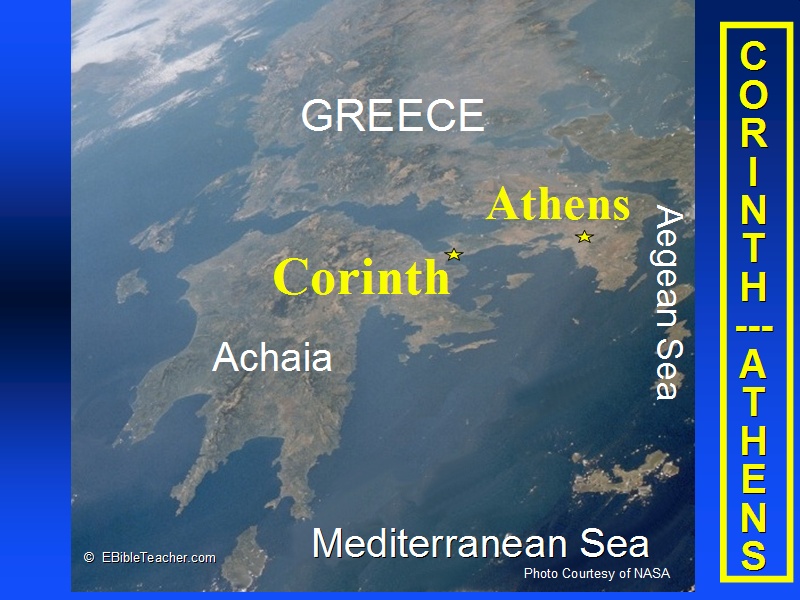
1 Corinthians 1:1-9 This sermon from January 16th marks the start of a new series on the first four chapters of 1 Corinthians, which we'll be studying through to the end of February. The governing idea for this series is this: there is always a distance between the ideal things and what actually is. There are always the ideal expectations that we have for all kinds of things, there are always ideal demands on behavior and on systems and governments. Think about campaign time in politics. We vote leaders in primarily based on the ideal platform that they present, and then spend the next few years frustrated at them because what actually happens is not what was promised. Think about relationships, especially marriage. When I counsel couples who are preparing to get married, the number one issue that we have to address is expectations. All married couples enter into the covenant of wedlock with very different and sometimes extremely high expectations about what their marriage will be like and what their spouse will be like. Sometimes the distance between the ideal adn the actual is huge, sometimes it is small. But is is always there. What about Christians. Why is it that some of the rudest, most difficult people you will meet are Christians? Ideally, Christians are to be loving, joyful, faithful, generous, kind, gentle, and excellent. In actuallity, Christians are rarely anywhere close to this (here's an interesting trailer for a documentary called, "Lord, Save Us From Your Followers.") If ever there was a Church that had a huge distance between the ideal and the actual, it was Corinth. According to St. Paul, they did stuff that even the pagans didn't do! Corinth sat on a major overland trade route that connected the Aegean and Adriatic seas. It was weathy, ecclectic, big, and debauched. It had, to use a therapeutic term, "issues". Like, issues with a capital "I". Like George Costanza type issues. And yet, when Paul writes to them he begins his letter by calling them, "the saints in Corinth...who are sanctified in Christ." What's going on with that?! How can such aweful people be addressed in such a way. Was Paul delusional adn pollyanna-ish, or was he ignoring or downplaying their issues? Certainly not, because he lets them have it for 15 chapters. The Gospel of Jesus Christ speaks to this distance between the ideal, that is our justified/righteous status through faith in Christ, and the actual, that is our struggle against sin and the very subjective state of our day to day holiness. Luther referred to this reality in the phrase: simul iustus et peccator - 'at the same time righteous and sinner.' So what fills the gap between the ideal and the actual? What fills the void between what we ought to do and what we don't do. Certainly, if we try to fill that gap on our own we will destroy ourselves. There are people who are driven to perfection: they see the ideal and they want it. And they will step on or push aside anyone to get it. Sometimes this pursuit of perfection is all about money. Sometimes power. Sometimes sex. And the list goes on. And the first thing that will be damaged if you try to pursue the ideal on your own is your family, because they will always fall short of your ideal. And so you will get frustrated and angry and squash them. No, it's not ourselves that fills the gap. It is only the grace of God which fills that gap between the ideal and the actual. Paul says that he gives "thanks to my God always for you because of the grace of God that was given you in Christ Jesus." God's love of the unworthy, the people who are trapped in actual, comes through his gracious gifts and his power to sustain them through their lives and be presented to God in the end as blameless.

Sunday, December 19, 2010

Advent 3 Sermon - Humble Worship

In the fantastic film Indian Jones and the Last Crusade, Indy has to find the Holy Grail. In order to do so he must pass three traps of extreme cunning and danger. The secret to passing the first trap is the sacred verse given him by his father, "Only the penitent man shall pass". Indy makes it through by realize that a penitent man is humble before God and kneel's (thus avoiding the spinning slicing blades of death).
In this sermon from the Third Sunday of Advent we look at preparing ourselves for worship through being humble. The Rite 1 liturgy is steeped in language and prayers which leads and causes the worshipper to be place in a position of humbleness before God.

Indeed, one can not go through this service and say the things we say and do the things we do, and in all honesty not have a stance of humility and need before God. This stands in opposition to our natural propensity which is that of God owing us our due, or that we are inherently worthy of God's kindness and attention.

Instead, the heartbeat of Anglican prayer is summed up in the Prayer of Humble Access: "We do not presume to come to this Thy Table, O merciful Lord, trusting in our own righteousness, but in Thy manifold and great mercies. We are not worthy so much as to gather up the crumbs under Thy Table; but Thou art the same Lord whose property is always to have mercy..."


You see, God, in all his glory and power and wonder, humbled and emptied himself and came to the earth as a human baby. Not a baby in a palace in fine linen, but a baby in a food trough. What then, does humility look like for us?

C.S. Lewis points out that true humility is not an athletic person pretending to be clumsy, nor an intelligent person pretending to be dumb (because such pretending is falsehood, and thus can not be truly humble). Instead, he argues that true humility is the one who comes before God and does not look left or right. True humility stands before God 'as is', not as-we-are-relative-to-someone-else.
The humble person is the one who recognizes their unworthy nature and their utter need of God's mercy and kindness. The humble person does not presume anything, but simply trusts in the promise of Jesus, that he came to seek and to save the lost. That he came not for the righteous nor the healthy, but for the sinner and the sick.
Like a football lineman who prepares for every snap of the football by getting in a three-point-stance, true worshippers prepare to come before their Lord through a heart filled with humbleness.

Tuesday, December 14, 2010

A Picture Says A Thousand Words

I usually get a lot of emails containing 'inspiriational' messages, stories, and headlines. Some are funny, some are milquetoast, most are not worth the time it takes to read them. During this Season of Advent and Christmas I tend to get even more inspiring emails. That's why I was extremely relieved when my buddy sent me the following picture with the caption: "You really know you've screwed up when...". This has absolutely nothing to do with Christmas, but I love Batman and ironic boneheadedness, and this picture captures both with spectacular simplicity. Sorry Jack, your Joker was just soooo 1989. Heath, RIP.


Sort of the equivalent of asking Sean Connory to sign a picture of Roger Moore. In the fan's defense, the actors in question wore makeup for the film - very confusing! The picture illustrates the sort of fuzzy, muddled thinking which is so pervasive. It might go something like this: "I like Jack Nicholson, and I know he played the Joker. Here is a picture of the Joker. Therefore the actor in the picture must be Jack Nicholson." The sequence of logic is sound, the premises on which it is based are severely flawed.
This is all assuming, of course, that the fan in question is an idiot. He very well may have done this on purpose, in which case I would tip my hat for bravery in incurring the wrath (or at the very least, scorn) of Mr. Jack "Remember-that-I-was-in-The Shining" Nicholson.

Sunday, December 12, 2010

Advent 2 Sermon - Matters of the Heart

Continuing in our Advent Season, this sermon of the Second Sunday of Advent takes a look at the central concept of the heart - in life, in worship, in love and obedience to God.

When the Scriptures talk about the heart, and when our prayer book uses "heart" or "heartily" (we heartily thank thee...) what are they referring to? Not merely the cardiac muscle in our chests that pumps blood, but rather the heart is the core of who we are. If I say, I love you with all of my heart, I mean that I love you with all that I am and have, to the very core of my being. This is the heart of a person, and out of the heart flows the drive of our desires, the impetus for our thoughts, and the motive of our actions. "Out of the overflow of the heart the mouth speaks" - Jesus (Matthew 12:34-35).


The Bible consistently teaches that a person's heart is naturally not good, but instead is corrupted and inherently selfish. While humans are created in God's image, they are Fallen and sinful, and need redeeming. Without God's intervention people's hearts are:


  • such that every intention of the thoughts of his heart was only evil continually (Genesis 6:5)

  • deceitful above all things and desperately sick (Jeremiah 17:9)

  • corrupt, they do abominable deeds, there is none who does good, not even one (Psalm 14:1-3)

  • the source of evil thoughts, murder, adultery, sexual immorality, theft, false witness, and slander (Matthew 15:18-20)

(See also: Genesis 8:21; 1 Kings 8:46; Proverbs 20:9; Romans 1:21, 3:23; 1 John 1:8-10)


What you and I need is a new heart. What Christians have, for millenia, called regeneration, and what Jesus called, being born anew (or born from above, or born again). From a new heart flows love, obedience, generosity, forgiveness, and peace. This transformed life is characterized by what St. Paul called the fruit of the Spirit.


But here's the catch: in this life the transformation of heart and mind and soul and body is not complete. We are reckoned (logizomai: imputed) righteous through faith in Jesus, and while our hearts are regenerate, there is still the sinful nature present. Thus for the faithful Christian, being born again is not the end of the battle against the selfish corruption of the heart, but rather the beginning!


This is where our liturgy speaks. It understands the corrupt heart and the power of God to forgive and justify. Those who wrote our prayers understood that the Christian life is first and foremost one of repentance, because it is in repenting that we are kept honest about our own shortcomings, weaknesses, and sin, and also kept focused on the completed work of Jesus Christ for our salvation. Remember, Jesus came to seek and save that which is lost, he came for the sinner not the righteous, for the sick, not the healthy.


The language of our Rite 1 liturgy is full of "heart" language. No less than 13 times do we express the term "heart" or "heartily": Almighty God, to whom all hearts are open...cleanse the thoughts of our hearts...we are heartily sorry for these our misdoings...lift up your hearts...we heartily thank thee...keep your hearts and minds in the knowledge and love of God...


Ours is worship not merely of the mind (cerebral) or of the eye (asthetic) but of the heart. If you come to church in worship and God does not do something to your heart, then what are we doing here!? Know this:


What the heart desires, the will chooses, and the mind justifies.


Our worship this Advent, and truly year round, is intended by the Holy Spirit to work on our hearts.

Monday, December 6, 2010

The Feast of St. Nicholas

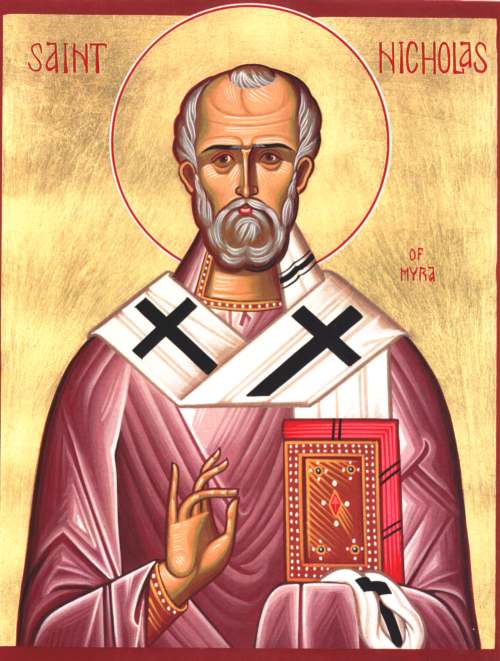
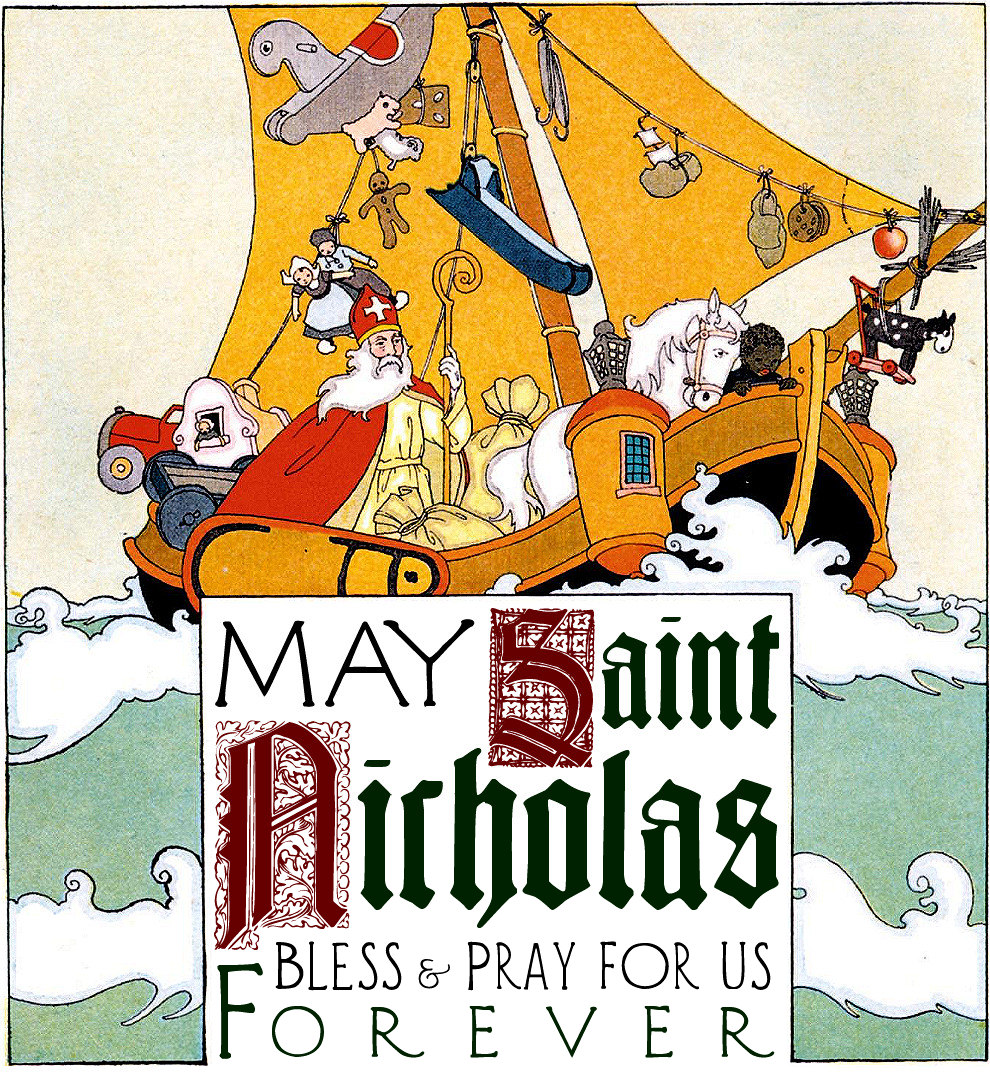
Yesterday was December 6th, as date so many of us are familiar with, or at least are whether we realize it or not. For me it marks the anniversary of my ordination (pause for applause...), but it is also St. Nicholas' Day. That's right, we celebrate and remember jolly old Saint Nick on December 6th. Ironically, most people end up celebrating Saint Nick on December 25th (to be read with biting cynicism). It's unfortunate that this remarkable man is so overlooked as he ought to be regarded, and unfortunate that our culture has gladly made Christmas more about him than about Jesus Christ - a fact of which I'm sure would cause the real St. Nicholas to roll in his grave. But what do we know about this man? How did he go from St. Nicholas to Santa Claus? Nicholas was born to wealthy Christian parents in Asia Minor in the third century (c. 270 AD), and became the Bishop of Myra. Myra was a harbor city on the Mediterannean coast. He is mostly regarded in the Greek Orthodox Church as the patron saint of sailors and fisherman, and is credited with being in attendence at the Council of Nicea in 325 AD. One story surrounding his sainthood involves the miraculous increase of a shipment of wheat which he convinced imperial sailors to offload at Myra. He died on December 6th, 343 AD, and so his feast day is celebrated on the anniversary of his death. Many stories and legends surround this interesting man, perhaps the most important one for us in the US has to do with his gift-giving to children. While there are a variety of versions, there are two that particularly lend influence to the Western tradition of Father Christmas. One story invovles an evil butcher who murders three children during a severe famine, but Nicholas sees through the butcher's treachery and miraculously resurrects the murdered children from the barrel containing their remains. The second story involves a poor man's three daughters, who cannot afford to marry and face a life of prostitution. Nicholas, wishing not to expose the family's predicament, goes to their home at night and leaves three bags of gold coins for the daughters to get married. In a variation on this story, he drops the coins down the chimney. If this is starting to sound familiar, it should. These saintly legends form the backdrop for our modern, American Santa Claus. It is interesting to note that in 1087, Myra was under seige from invading Muslim armies, and Italian sailors transferred (or stole, depending on whose side of the story you take!) Nicholas' remains to protect them and interred them in a church in Bari in southern Italy. Nicholas' notoriety spread from there along with his patronage of giving gifts to children. The Dutch called him Sinterklaas, from which we derive the name Santa Claus (Santa=Saint; Claus is a truncation of Nicholas). I find the transformation over the years of Nicholas into Santa Claus to be both fascinating and saddening. I truly loathe the gluttonous debacle that Christmas has become in our country. Although, I suppose department stores wouldn't have sales at midnight on THANKSGIVING (!) if they thought no one would show up. But they do. In droves. Pathologically feeding our insatiable desire to buy, and justifying it by claiming 'good will' and 'the Christmas spirit'. The real Nicholas gave because of his love for the greatest gift of all, the Son of God given to humanity. Some say his inspiration for giving came from the wise men who brought gifts to the infant Jesus (Matthew 2:1-12). So here's the rub: do we give at Chrsitmas because we simply love to buy things, or do we give because we love the Son of God who was given to us? St. Nicholas vs. Santa Claus...there kahn bee only wan (in best Christopher Lambert voice).

VS.